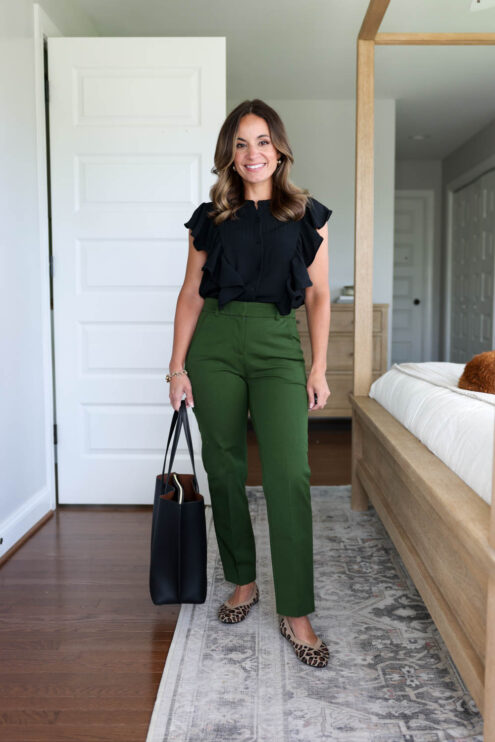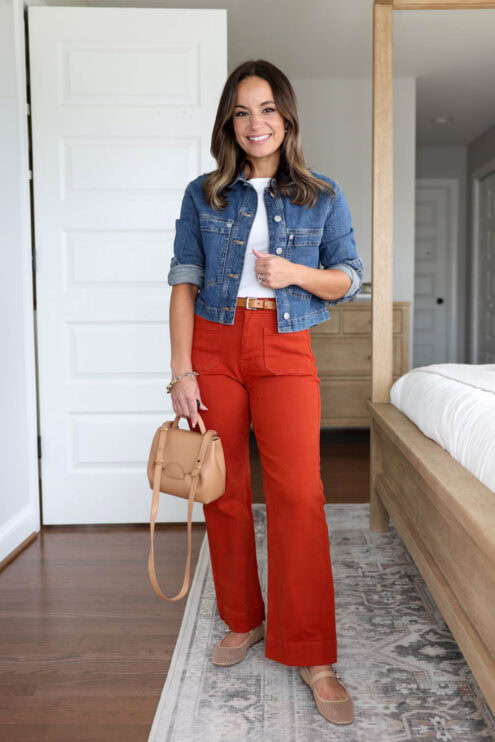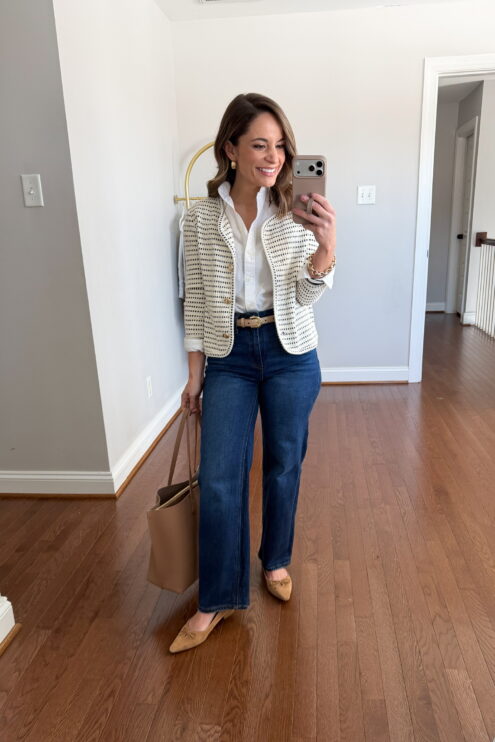
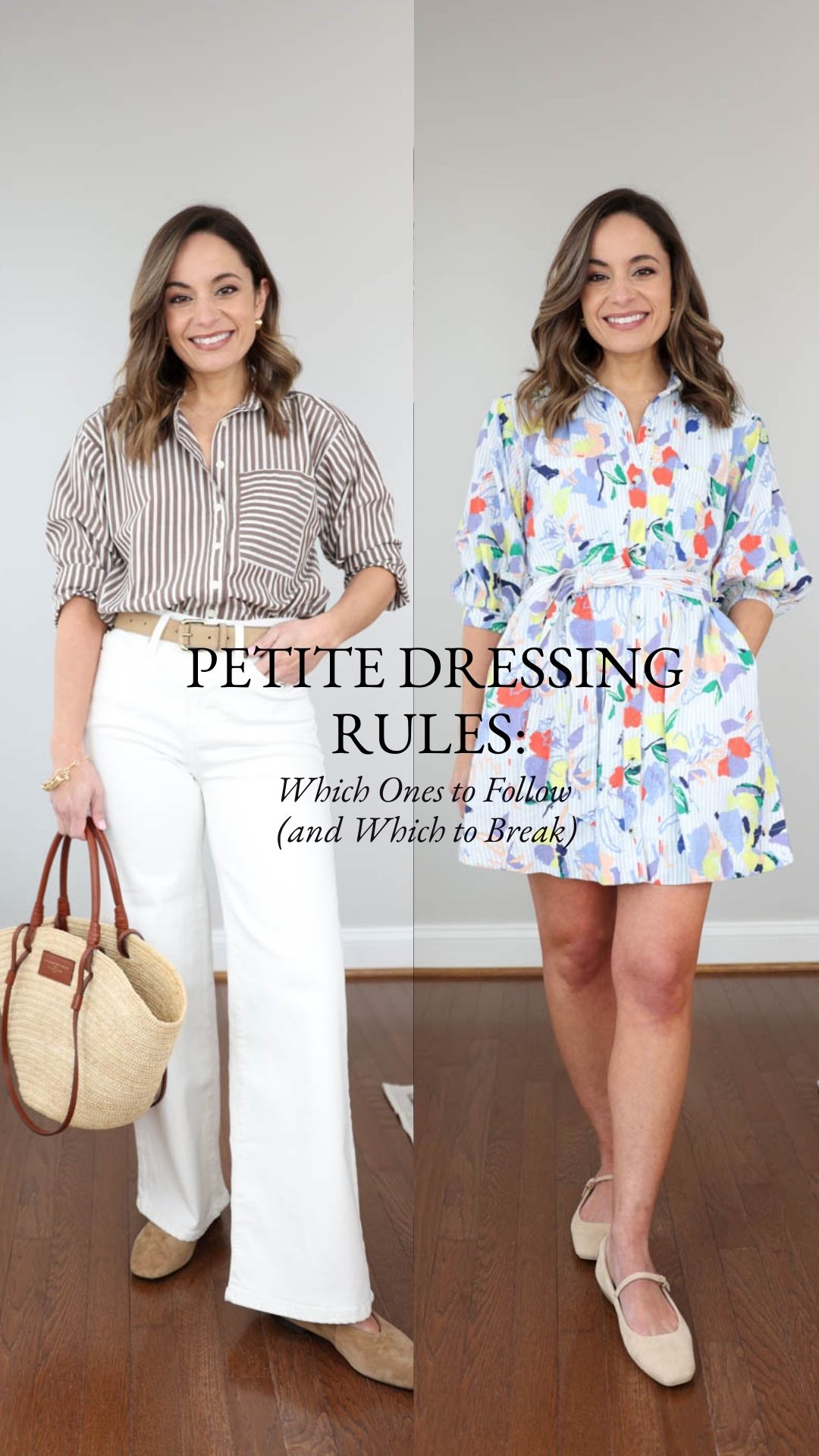
You’ll find plenty of posts online telling you to wear this and avoid that. Sometimes they’re trend-driven, other times they’re based on body type. They’re meant to be helpful — but they can quickly feel overwhelming, limiting, and honestly, a little confusing.
I’m not big on strict petite dressing rules. I wear jackets and blazers that aren’t cropped, I’ll reach for bold prints now and then, I love a midi or maxi dress, and I definitely don’t always wear heels just because I’m short.
So today, I’m breaking down the most common petite dressing dos and don’ts. I’ll show outfits where I followed the “rule,” outfits where I ignored it, and share the one guideline I can’t seem to stop following — no matter what.
For shopping links, photos in this post will link to the original posts they were published in.
Petite Dressing Rules: Which Ones to Follow (and Which to Break)
My Sizing: I’m 4’10”, and my bust, waist, and hip measurements are 32″, 24″, and 36″. My inseam is 25″ (the measurement from the inside of my leg to my ankle bone). The clothes shown are unaltered and show how they fit me right from the store. I list my sizing beside each item to help you compare when shopping online. When referencing my true size, that is often the smallest option available at a brand or petite xxs/00/24. I wear a size 5 shoe.
Choose Shorter Jackets (I break)
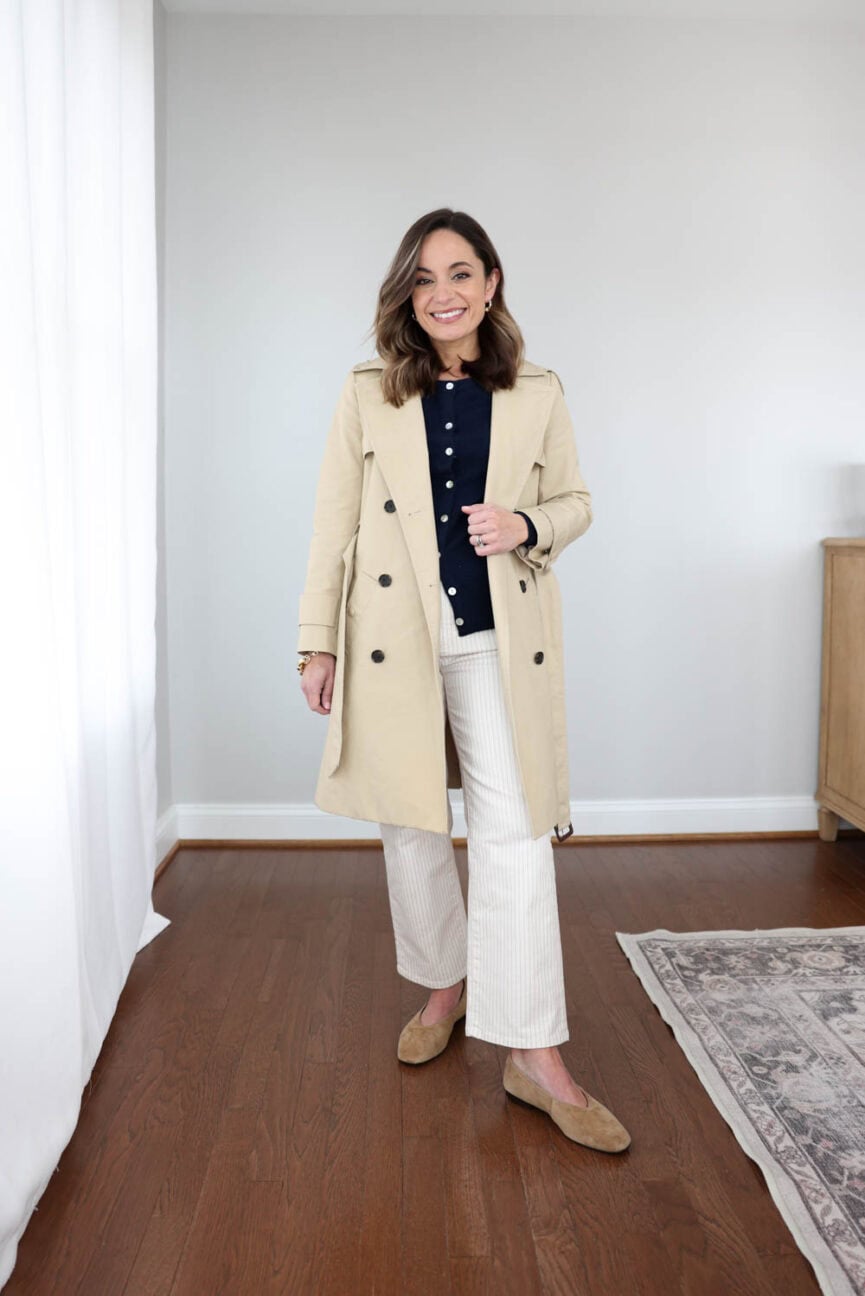
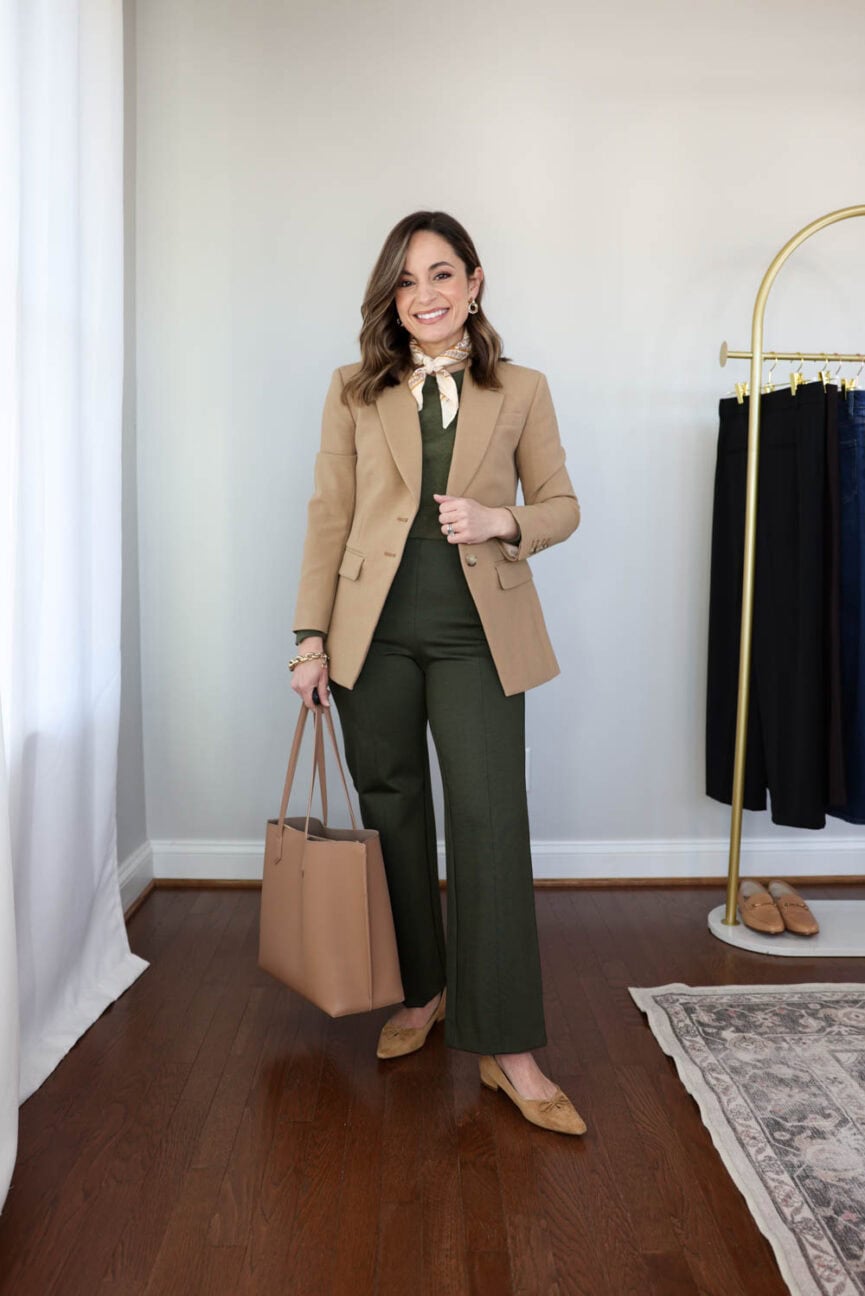
It’s a common suggestion that petites should only wear cropped jackets and coats, with the idea that longer lengths will shorten your frame. I don’t completely agree.
Yes, a cropped jacket can create balance on a petite frame — you’ll see in the photos below that the shorter jackets make my legs look longer. But it’s not to say you can’t wear a longer jacket if you’re petite. I’m pear-shaped in addition to being petite, and cropped styles can sometimes highlight my hips and make my midsection appear wider. A longer jacket or coat that skims over that area often feels more balanced on me.
My take? You can go either way. It really comes down to proportions and how the piece works with the rest of your outfit.
Below, you’ll see outfits styled with both cropped and longer jackets so you can decide which feels most balanced to you. Here are few things I’ve found over time work best on my frame:
- Balance cropped styles with bottoms that don’t highlight my hips, like straight, relaxed straight or wide leg jeans. I find a cropped jacket paired with skinny or flare/bootcut jeans highlights my hips.
- Balance long styles by pushing back or cuffing the sleeves (when you can). Choosing jackets and coats that fit well at the shoulders and sleeves also add balance to long styles.
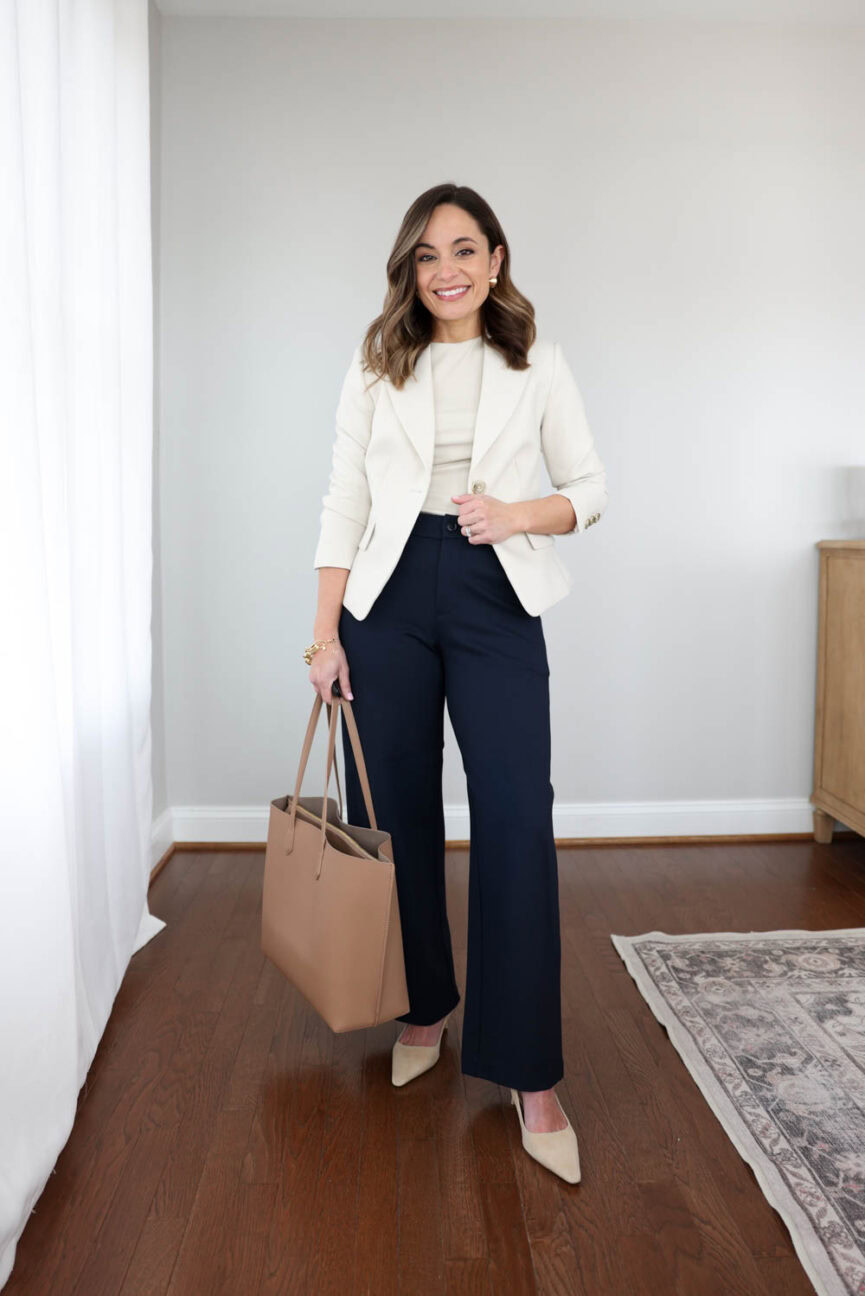
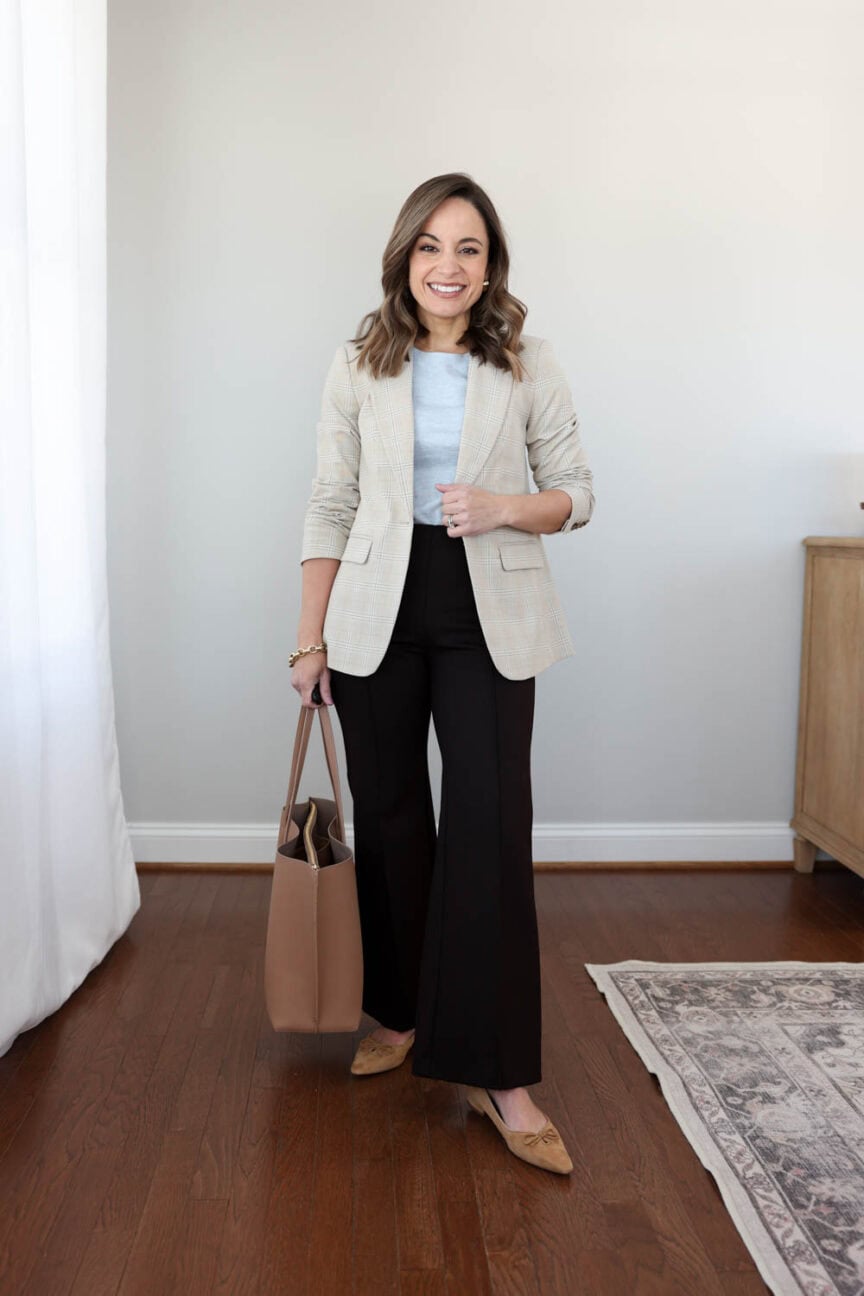
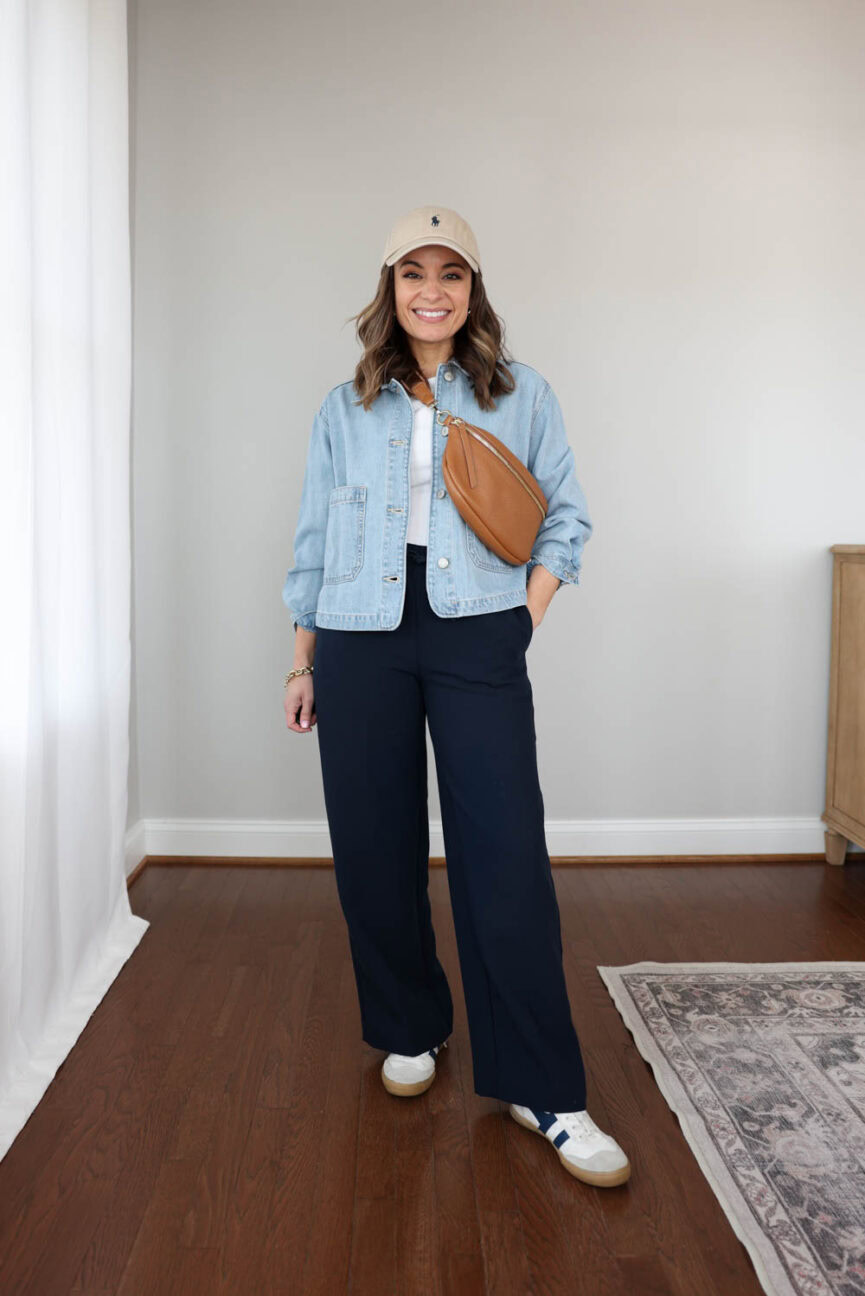
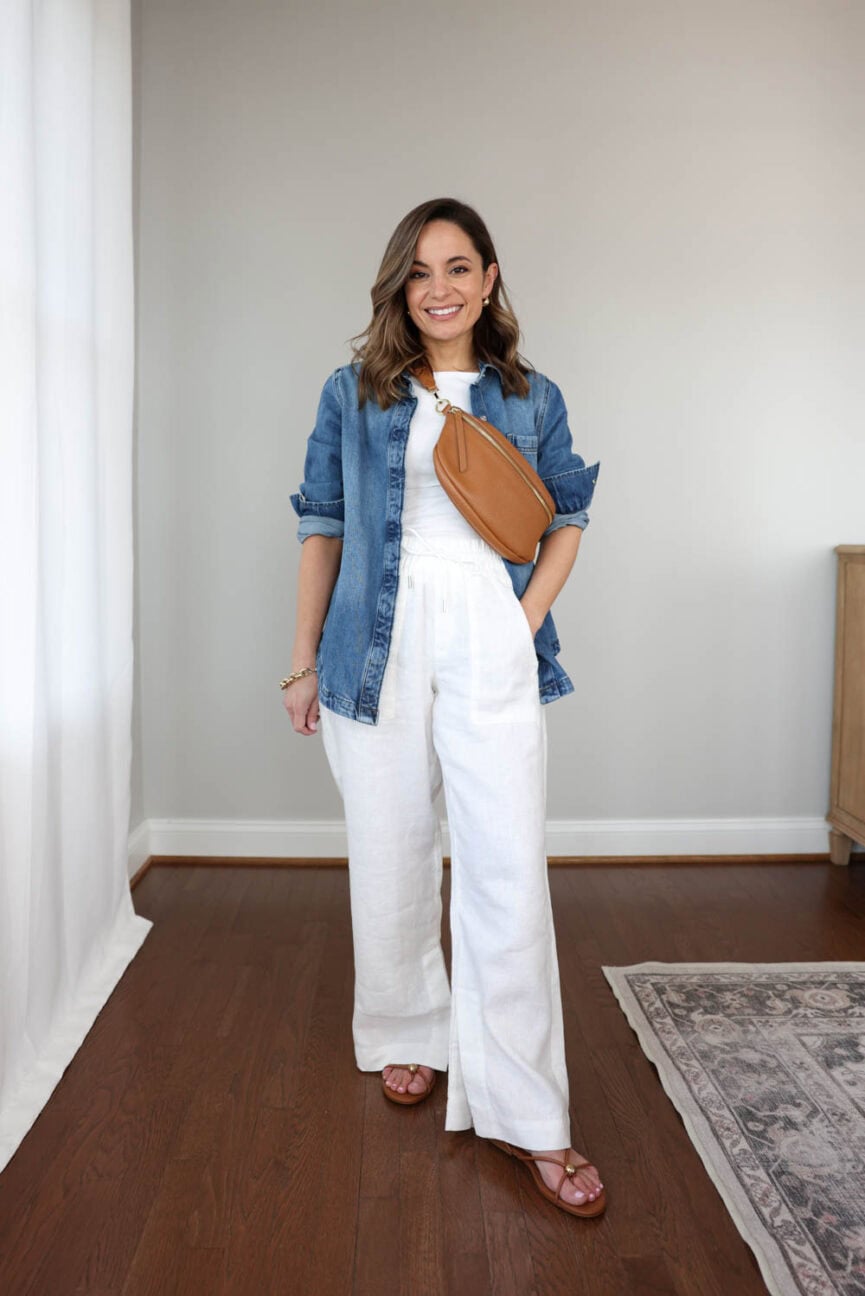

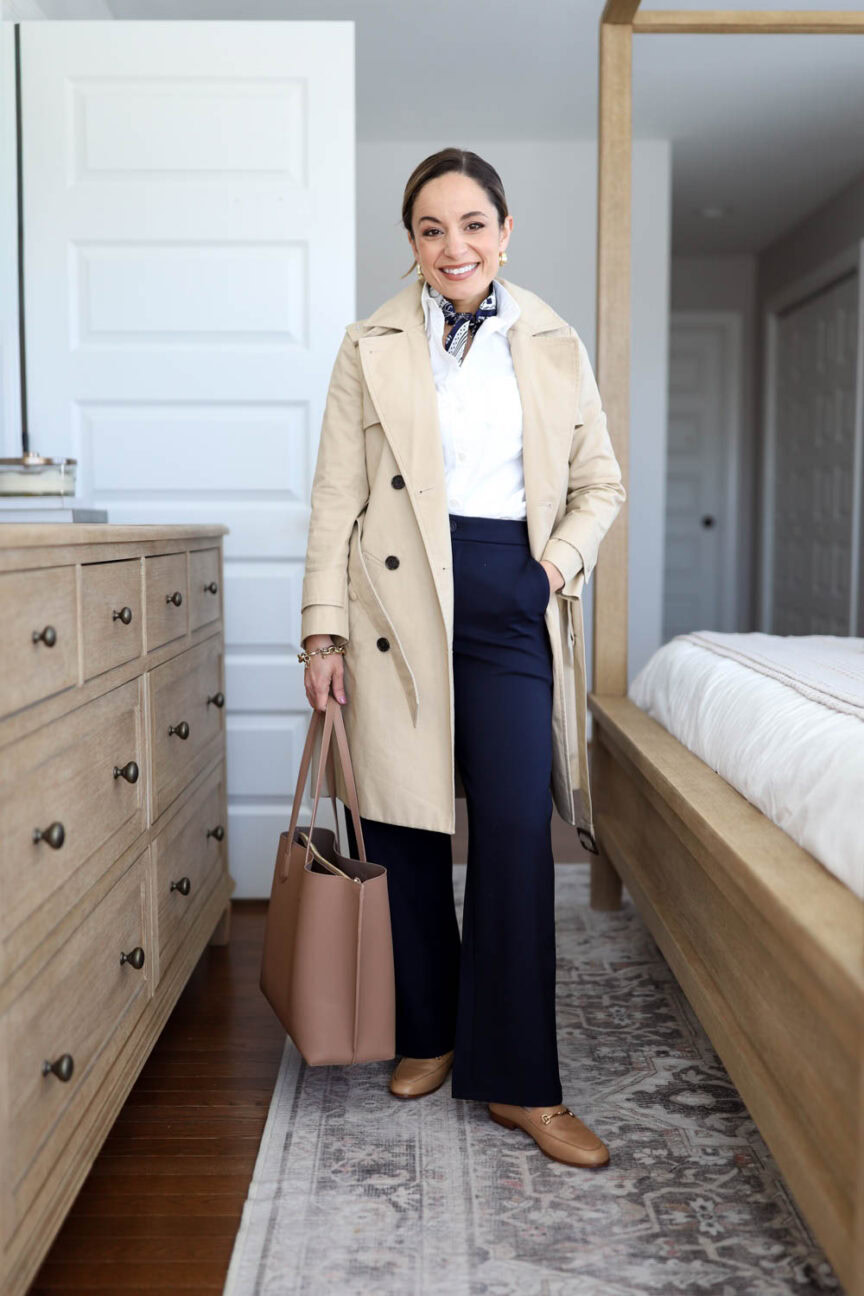
The only length I consistently find challenging is a coat that falls below the knee. I’ve tried them — and even own a few — but I often feel overwhelmed by that much fabric. I see lots of other petite ladies pull them off, but there’s no denying it makes me look shorter.
You’ll notice I push sleeves back a lot, because it adds balance. But not all coats and jackets can be pushed back, in that case make sure they fit you well at the shoulders and sleeves.

Keep Hemlines Above the Knee (I break)
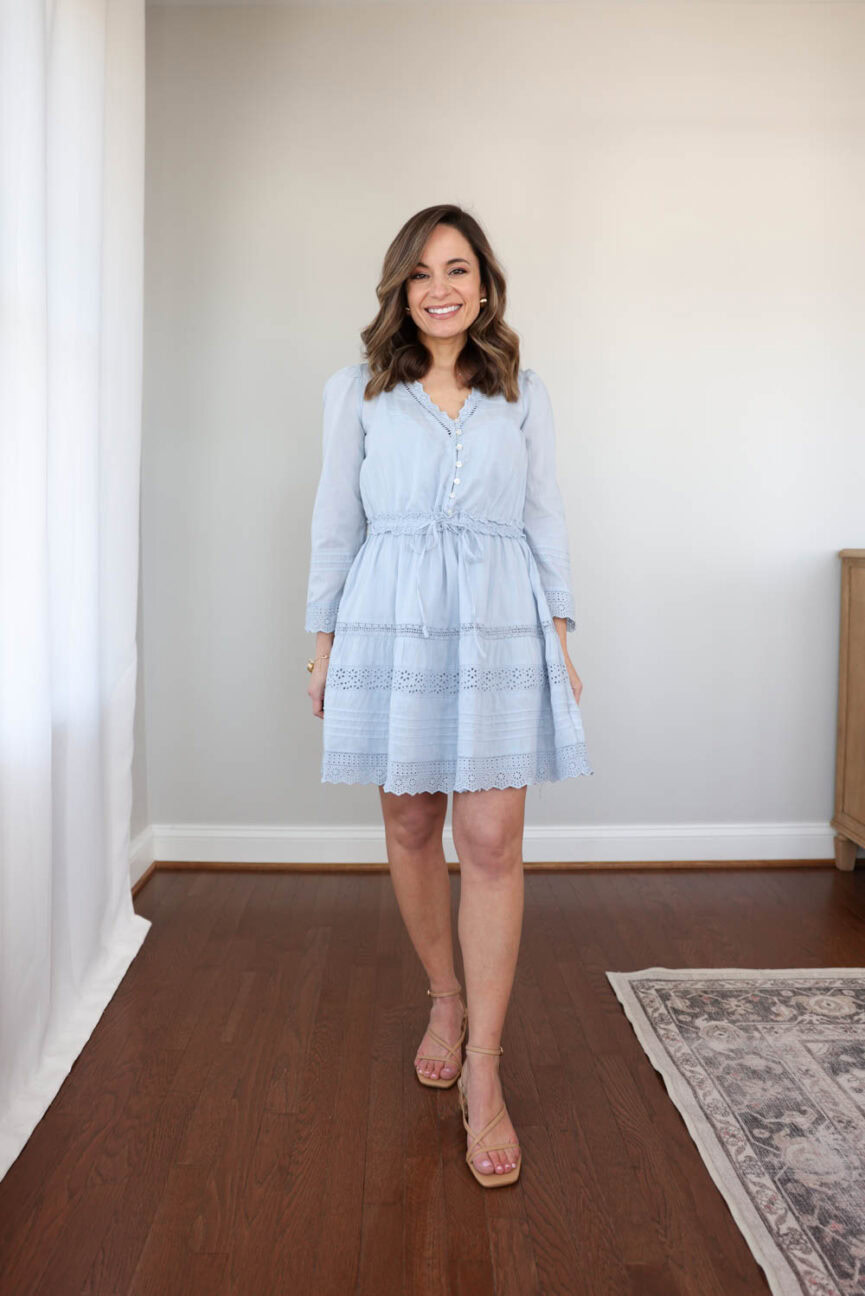
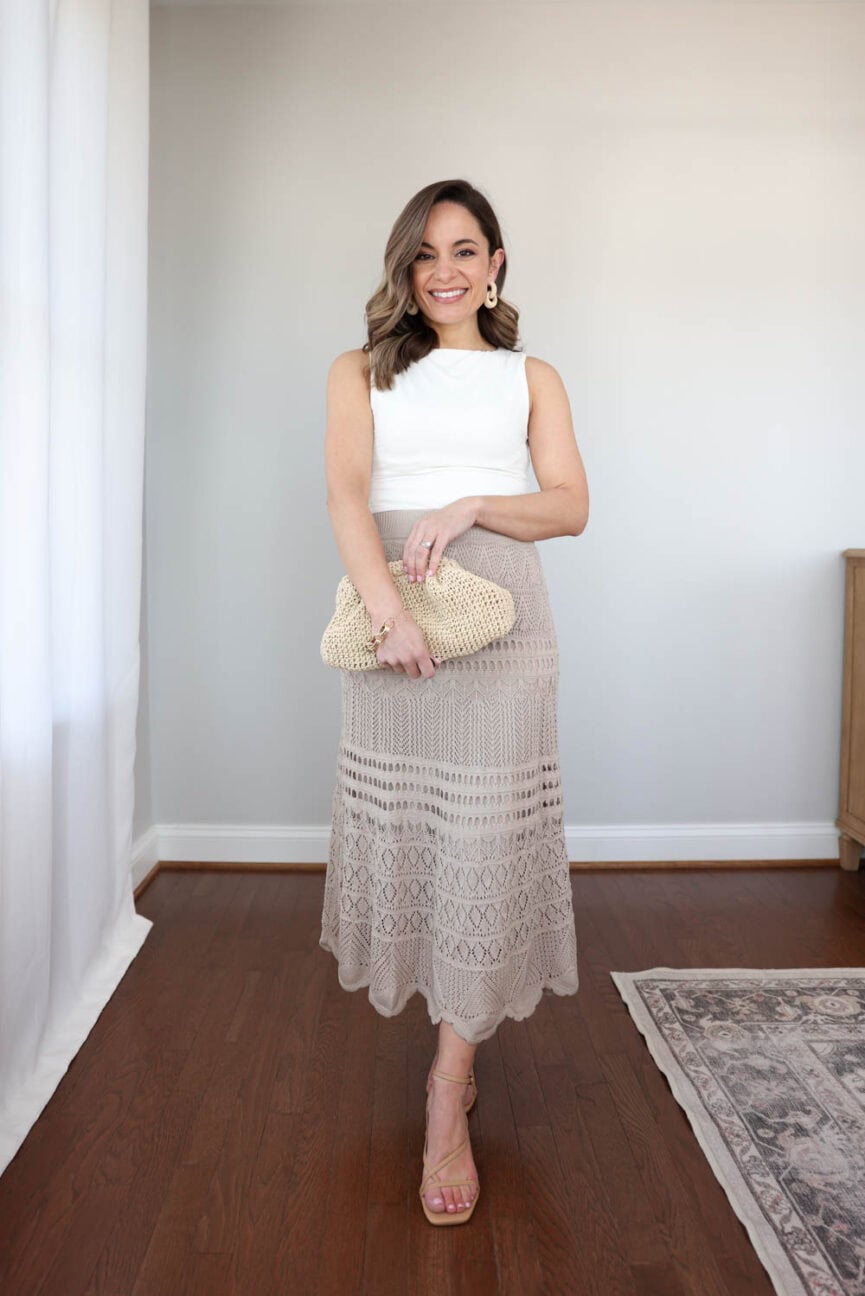
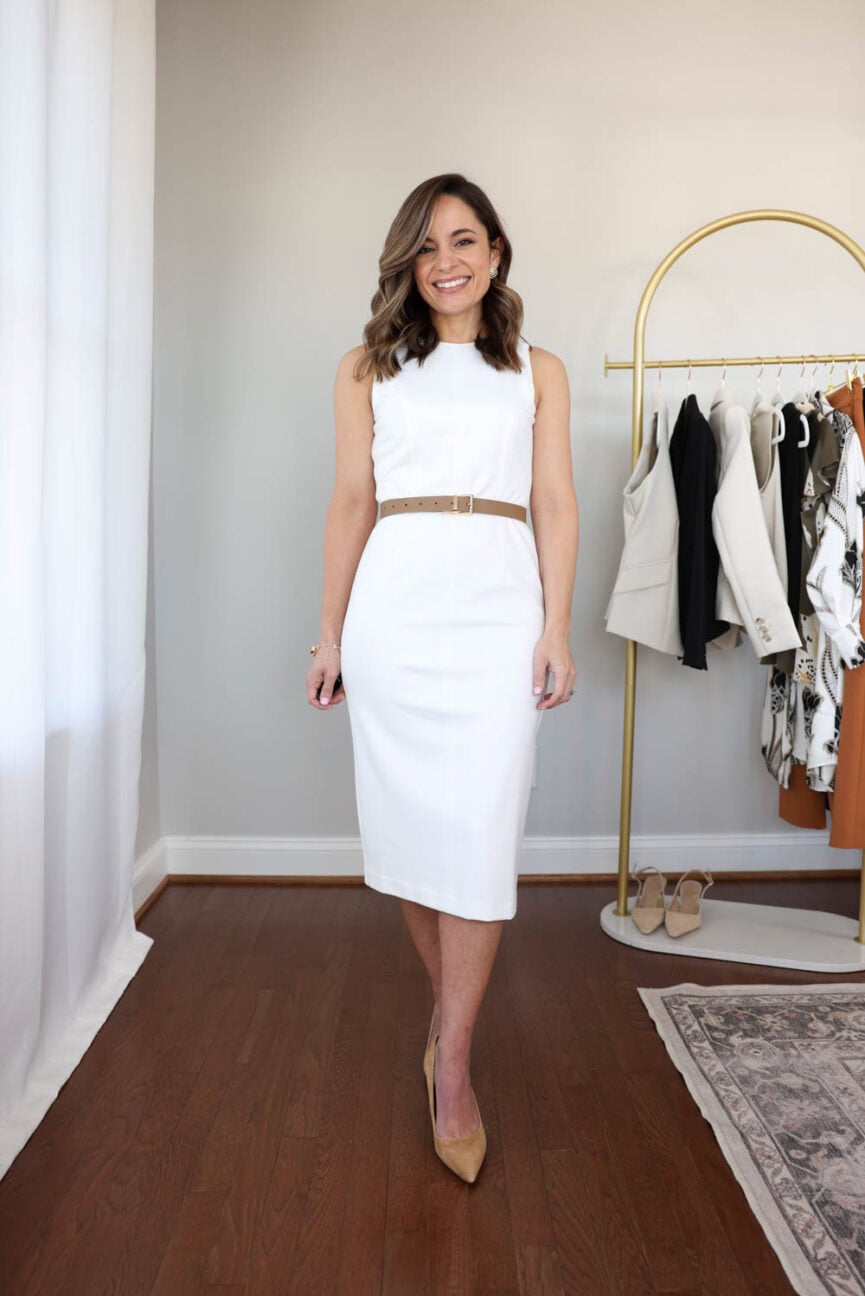
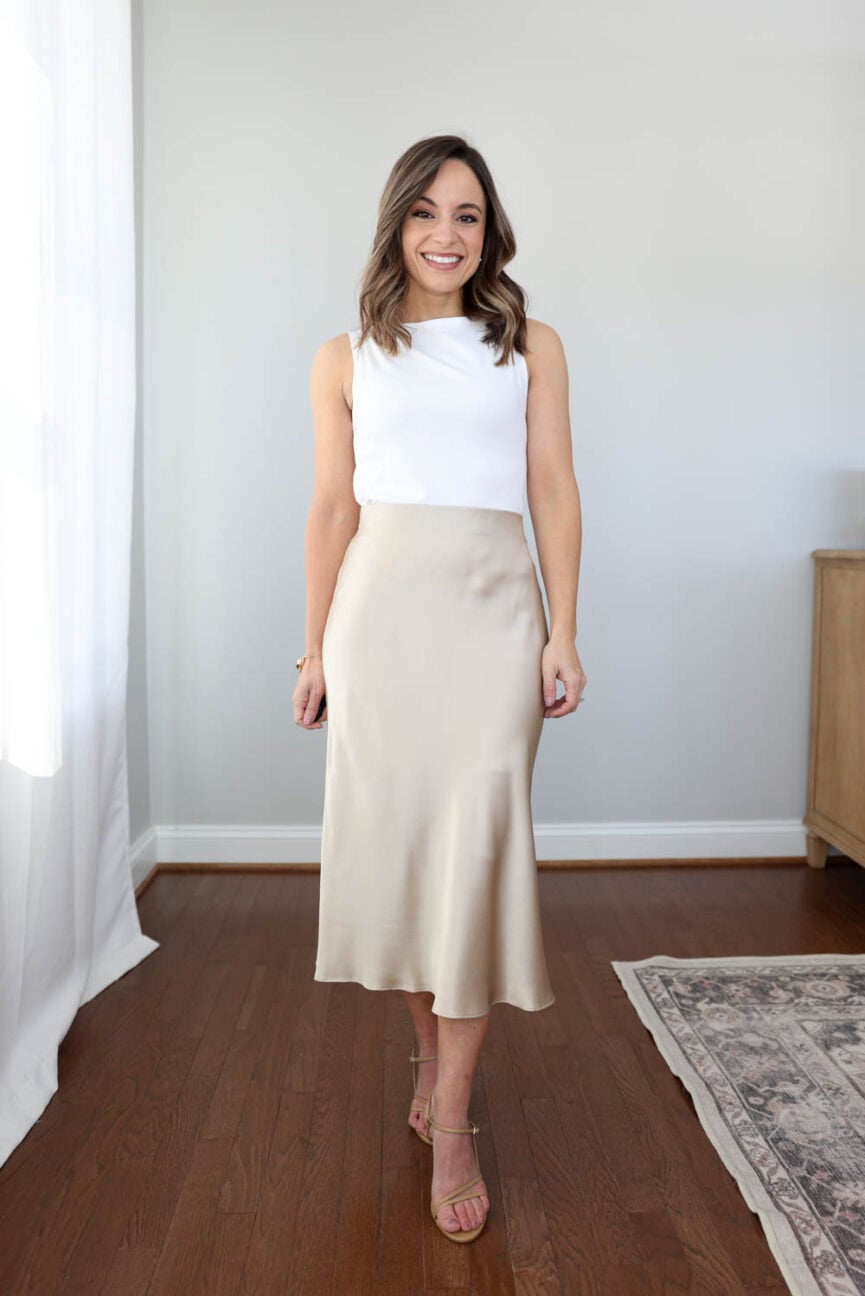
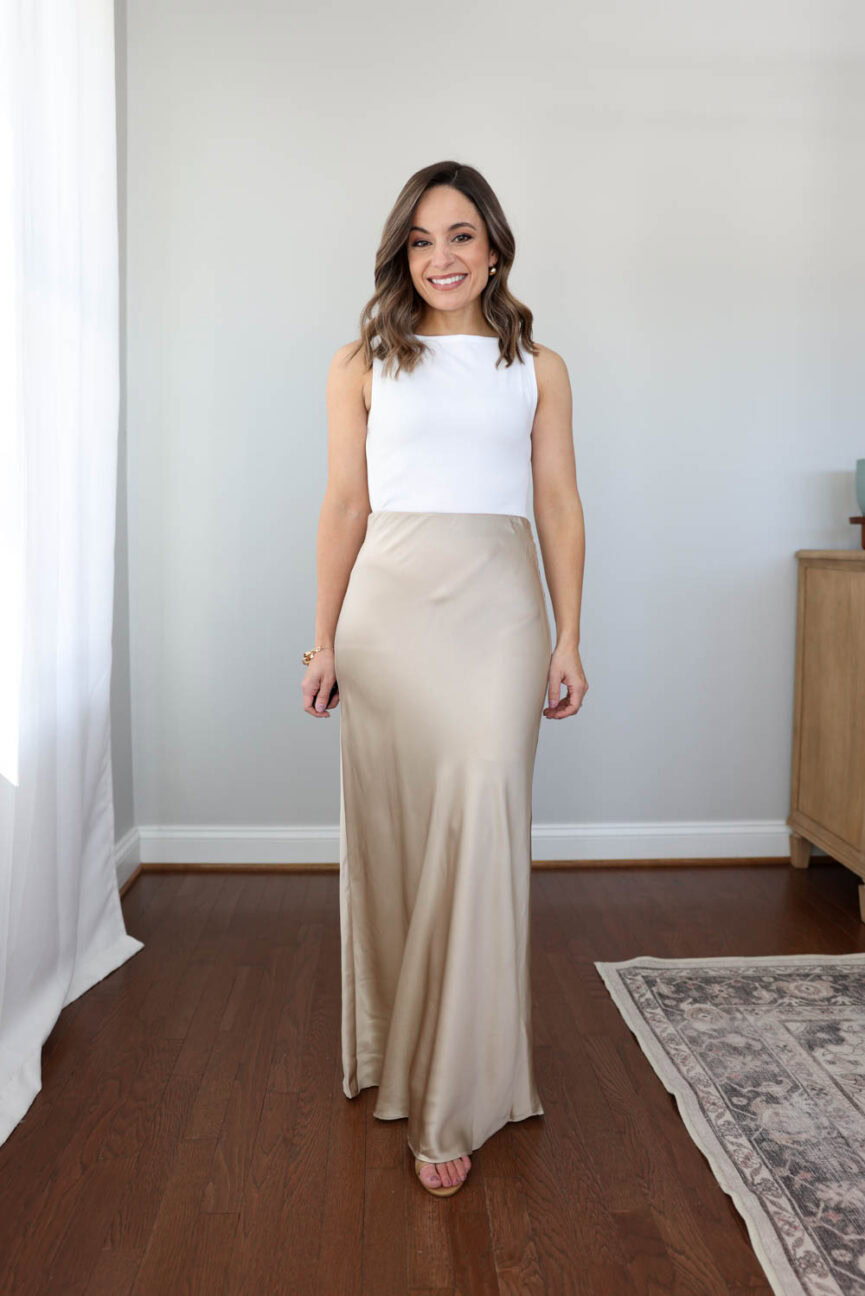
The more leg you show the longer they will look. There’s no denying that fact. But for practicality and life, that’s not what I’m going to limit myself to. I’m a 38 year old mom of two, and when I want to throw on a dress for a casual comfortable day or wear a dress to church, a mini isn’t my first choice. So I’m all for breaking the rules there. If you want to wear longer dresses and skirts when you’re petite there are definitley a few things you can look for in the fit and style of the dress to add balance. Here are a few things about dress length that I keep in mind:
- If you go for a mini, make sure its truly above your knee. Dresses that hit at the knee instantly make you look shorter, moreso than a midi style. I like my mini lengths to be 1-2″ above my knee.
- Make sure the dress fits well at the armpits, waist, and shoulders. No matter what length you choose, a dress that isn’t proportioned for you at the arms and waist will shorten your frame. Making sure it fits well up top can help you pull-off a longer dress.
- If you’re looking at a dress with a loose relaxed fit, pick one that is above the knee for the best balance.
- Go nude! No, I don’t mean you have to choose a nude dress. But you’ll see in the outfits below, the dresses that are close to my skin tone make me look a little taller, no matter what length they are.
- Choose a monochromatic or small print dress. I 100% do not stick to this rule, but it is one that will always make you look taller.


Avoid Large Prints (I break)
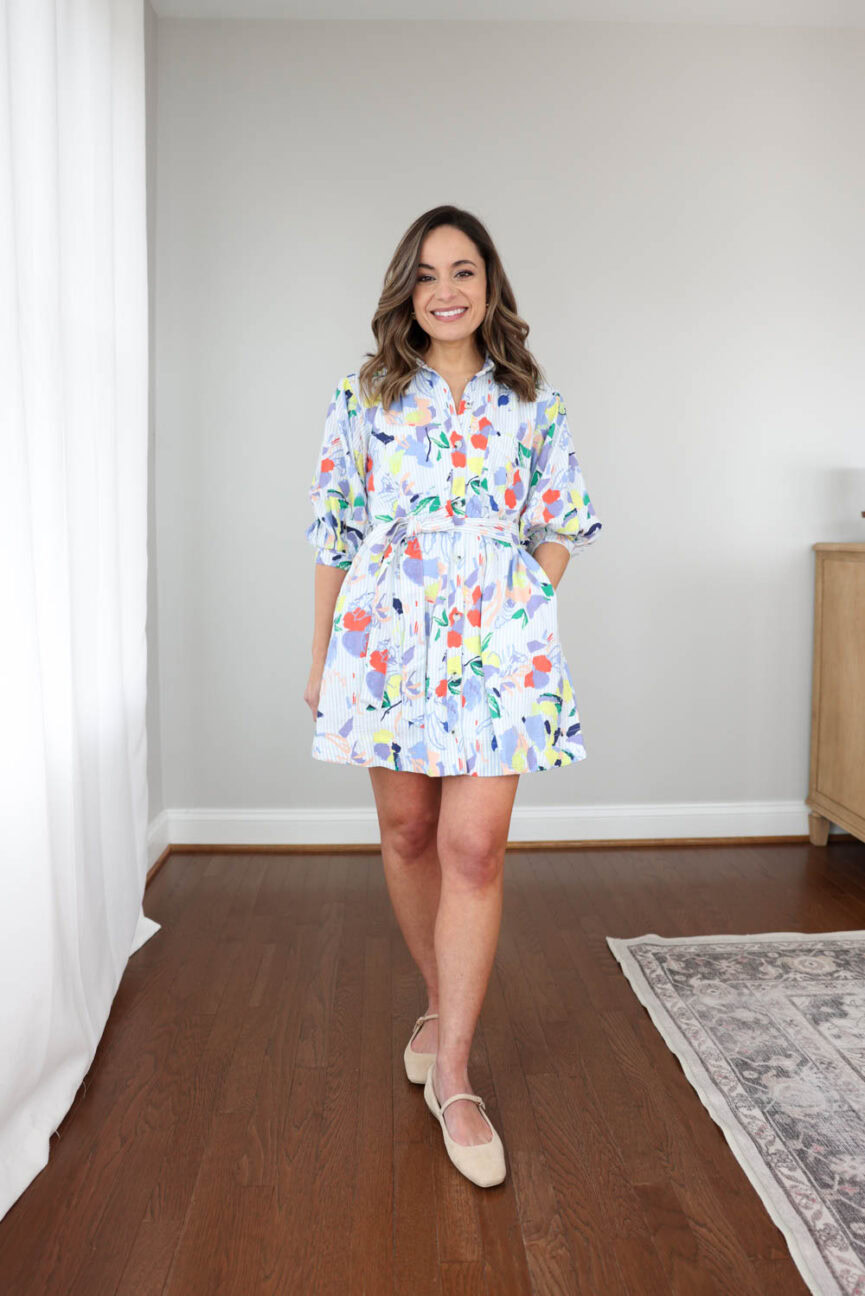
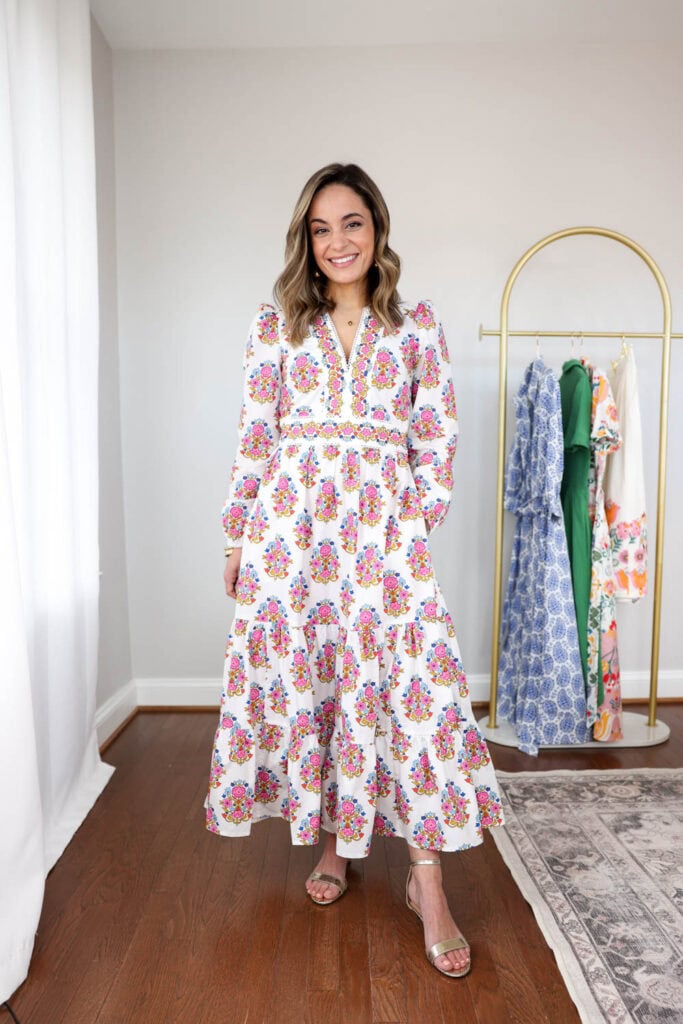
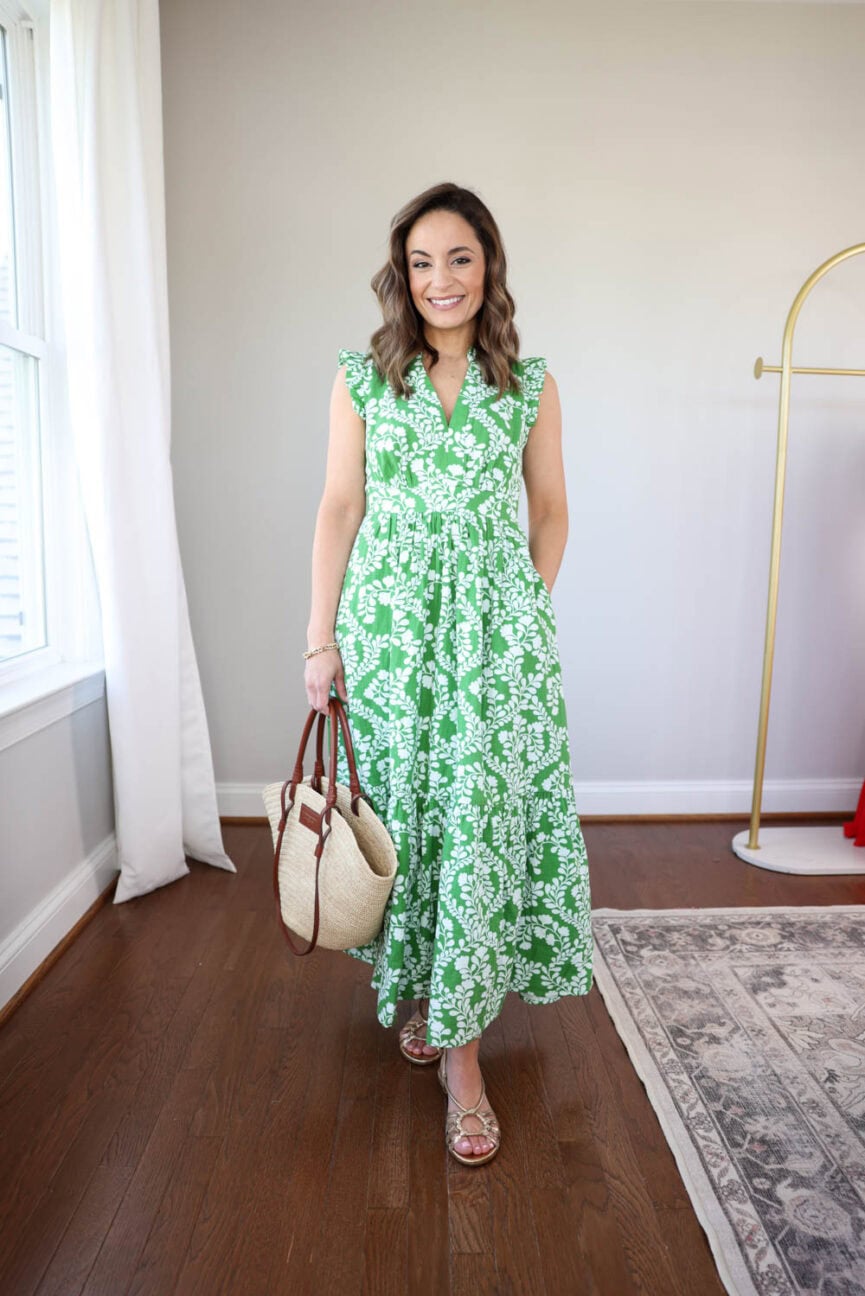
Every time I share a Boden dress, someone messages me to say petites shouldn’t wear large prints. But honestly — where’s the fun in that?
Yes, oversized or bold prints can feel overwhelming on a smaller frame. But that doesn’t mean you can’t wear them. Fit and proportion matter more than the scale of the print. When a bold-print dress fits well at the shoulders and waist, it feels much more balanced. A shorter hemline can also help keep the overall look from feeling heavy but at the end of the day, if you love it – wear it!
Below are a few bold-print dresses I’ve worn over the years. Some of you loved them, some of you didn’t — and I’m perfectly okay with that.

Opt for Cropped or Ankle-Length Pants (I break)
Petite women can absolutely wear full-length pants and jeans. In fact, the more I compare cropped styles to full-length on my frame, the more I tend to prefer the full-length options.
Yes, pairing heels with a full-length leg can create a very elongated look — but I also think full-length styles add length even when worn with flats. Plus, full-length styles are often easier to pair with different shoes, and the ankle coverage is more comfortable in cold seasons.
For me, the key isn’t just the inseam — it’s the rise. I’ll get into the nuance of the rise in the next section, but generally, a rise that hits at or just slightly above your belly button creates the most balanced proportions on a petite frame.
Another thing to consider is the style of the jeans. Nothing will shorten you faster than a slim or skinny style of pants that buckles and bunches on top of your foot or needs to be cuffed. Slim styles need to come above your foot and shouldn’t come above your ankle bone. They can graze the top of your foot, but make sure they don’t bunch. Wide leg, flare, and relaxed straight styles that have an opening that can come over your foot can be worn a little longer, and can buckle a little without shortening your frame.
Take a look at the cropped versus full-length styles on me below and see which proportions you prefer. You’ll also see the difference between wide and slim styles below, and there’s no denying that the popular wide styles make me look wider and bigger than I am. So for all of you who tell me they make you look bigger, you’re not wrong. However, I really do like them, even if they add volume, I’m ok with it.
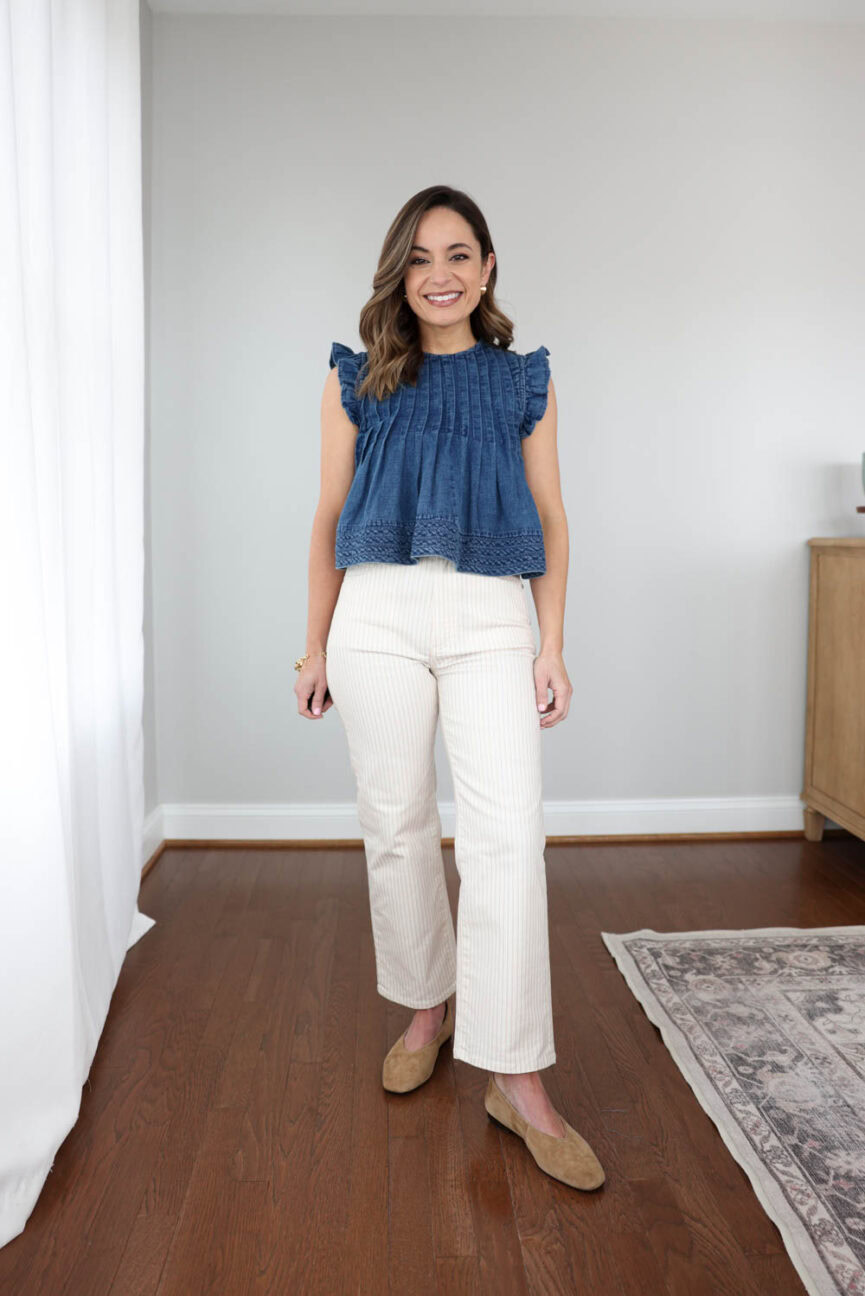
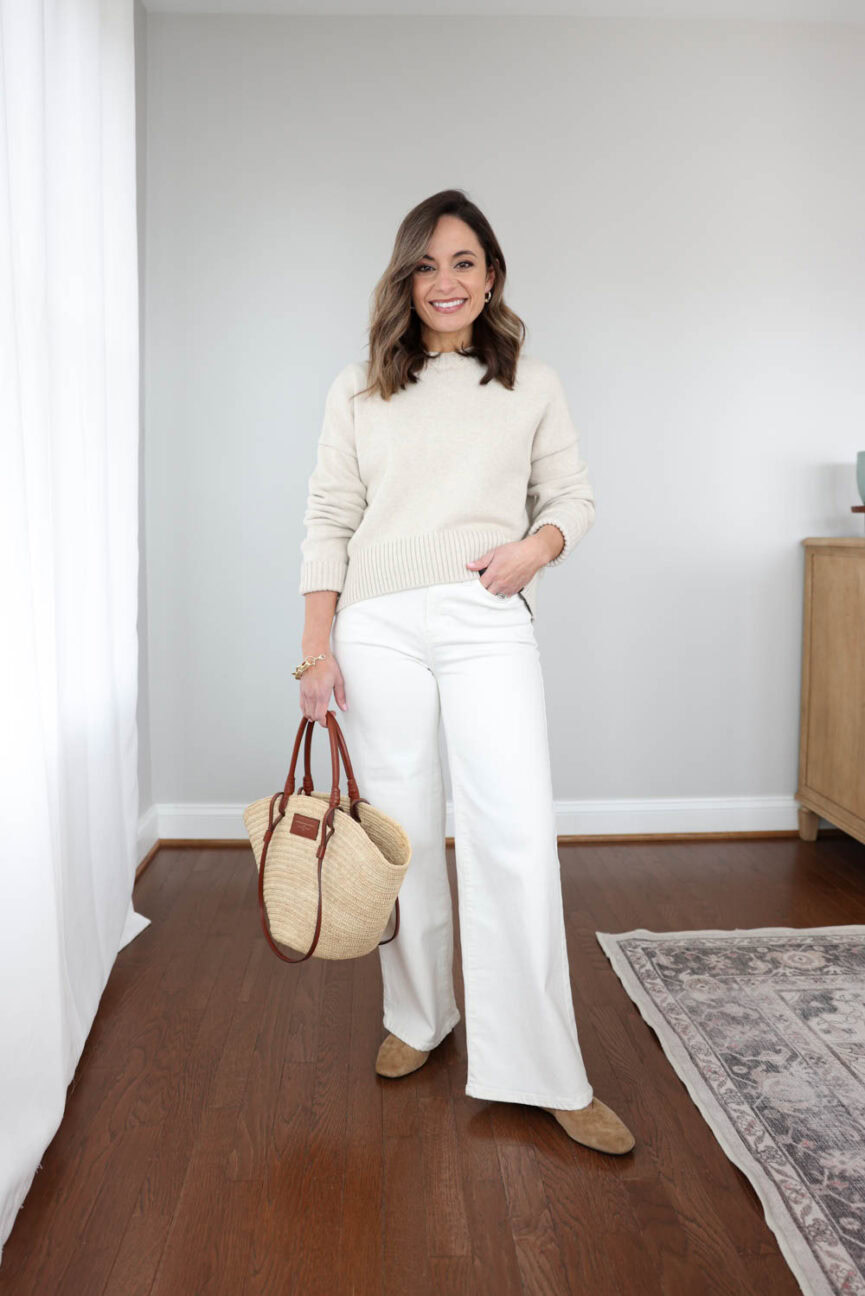



Let’s also mention that there is such a thing as too cropped. Below you’ll see how the jeans on the left are too short for me and make me look even shorter.


Choose High-Rise Bottoms (I follow)
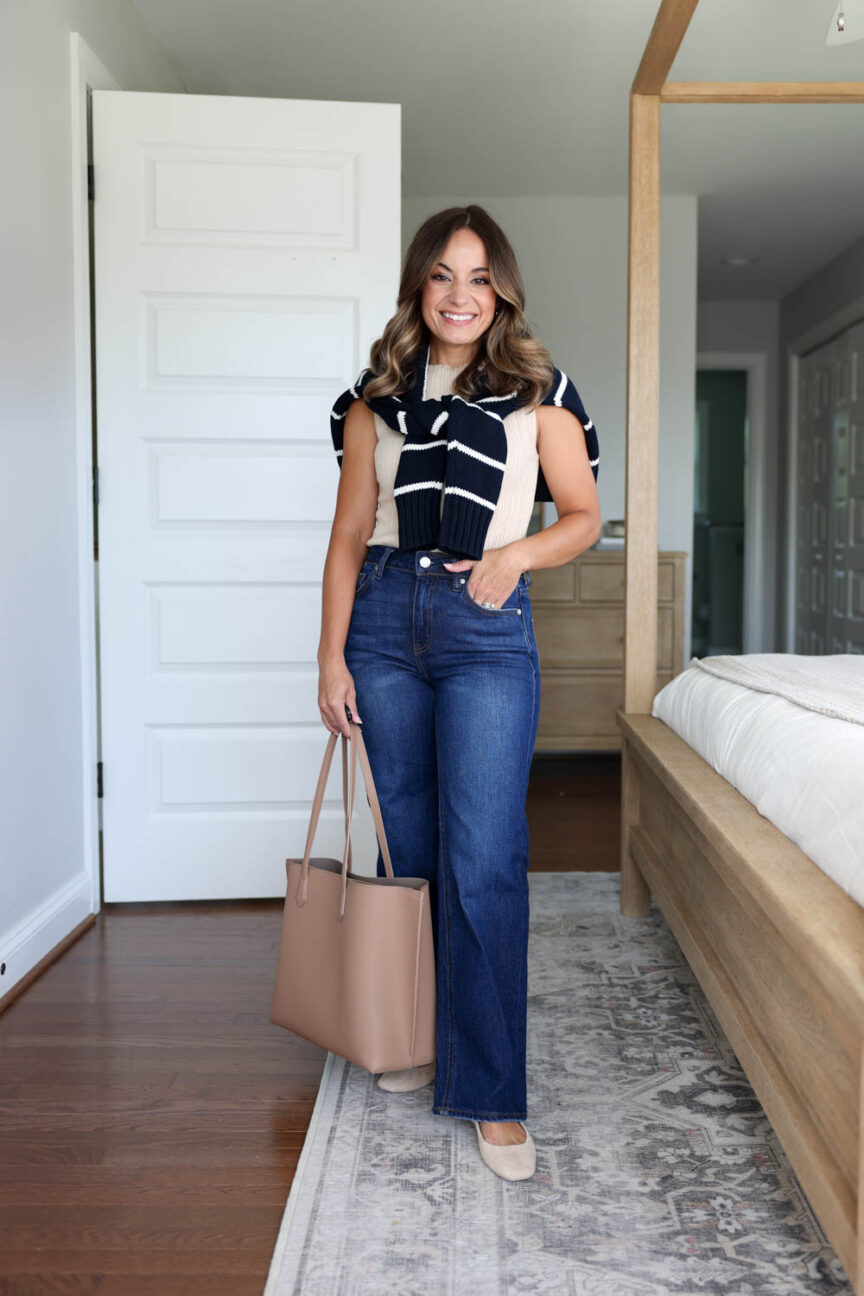
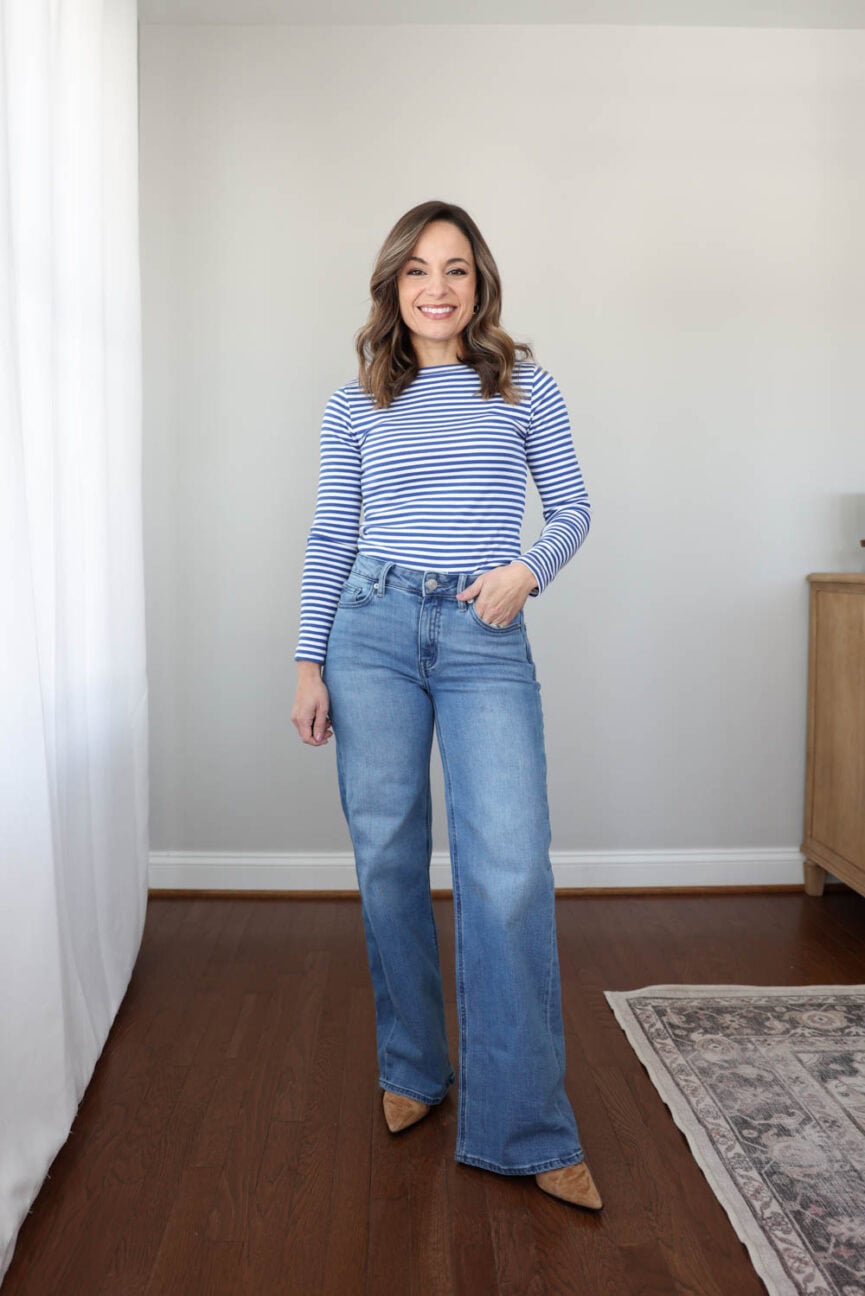
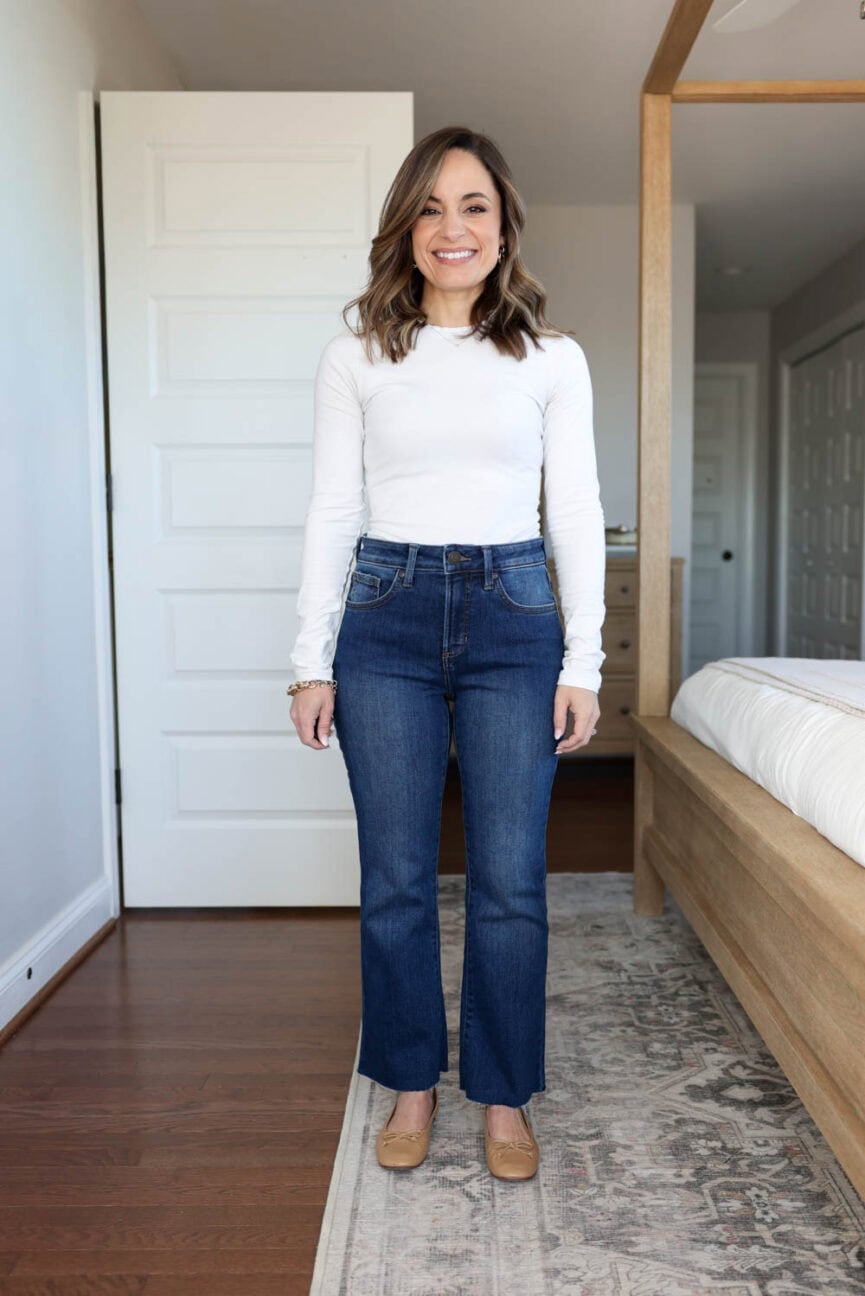
One rule I can’t deny makes me look taller is wearing high-rise bottoms.
But let’s first talk about what ” high-rise” means.
When people talk about “high-rise,” what they’re really referring to is how the pants visually divide your body. The goal is to make your leg line appear longer in relation to your torso — because longer legs = a more balanced, elongated silhouette on a petite frame.
The sweet spot for high-rise is typically at or slightly above the waistline, often the belly button, but consider your personal proportions. Your best rise might be a labeled high-rise, a mid-rise, or even a standard rise — as long as it lands in that visually balanced place.
This holds true for skirts, shorts, and dresses as well. If they highlight your natural waist, they will visually lengthen.
That said, comfort matters. If you prefer a lower rise, I’d skip the fully tucked-in top and instead choose tops designed to be worn untucked so the proportions aren’t highlighted. For example, you can wear a peplum-style blouse or a button-up top with lower-rise jeans to create balance.
Below are examples of mid-rise and high-rise styles on my frame so you can see the difference for yourself.


Avoid Oversized Silhouettes (I break)
Oversized is definitely trending right now, but one of the main reasons people often comment that I “look taller than 4’10” is because I focus on fit and proportion.
That doesn’t mean wearing everything tight. It means wearing pieces that are properly proportioned for my frame. Details like armholes that aren’t too low, shoulders that hit in the right place, and waistlines that sit where they’re supposed to all make a difference.
But oversized isn’t out of the question. If I go oversized, I add balance with bottoms that fit well. I cuff or push back the sleeves, and if appropriate, I tuck in the top. Oversized isn’t a no-go it just requires a little bit of styling to work.


The One Rule I Always Follow – Choose Light Neutral Shoes
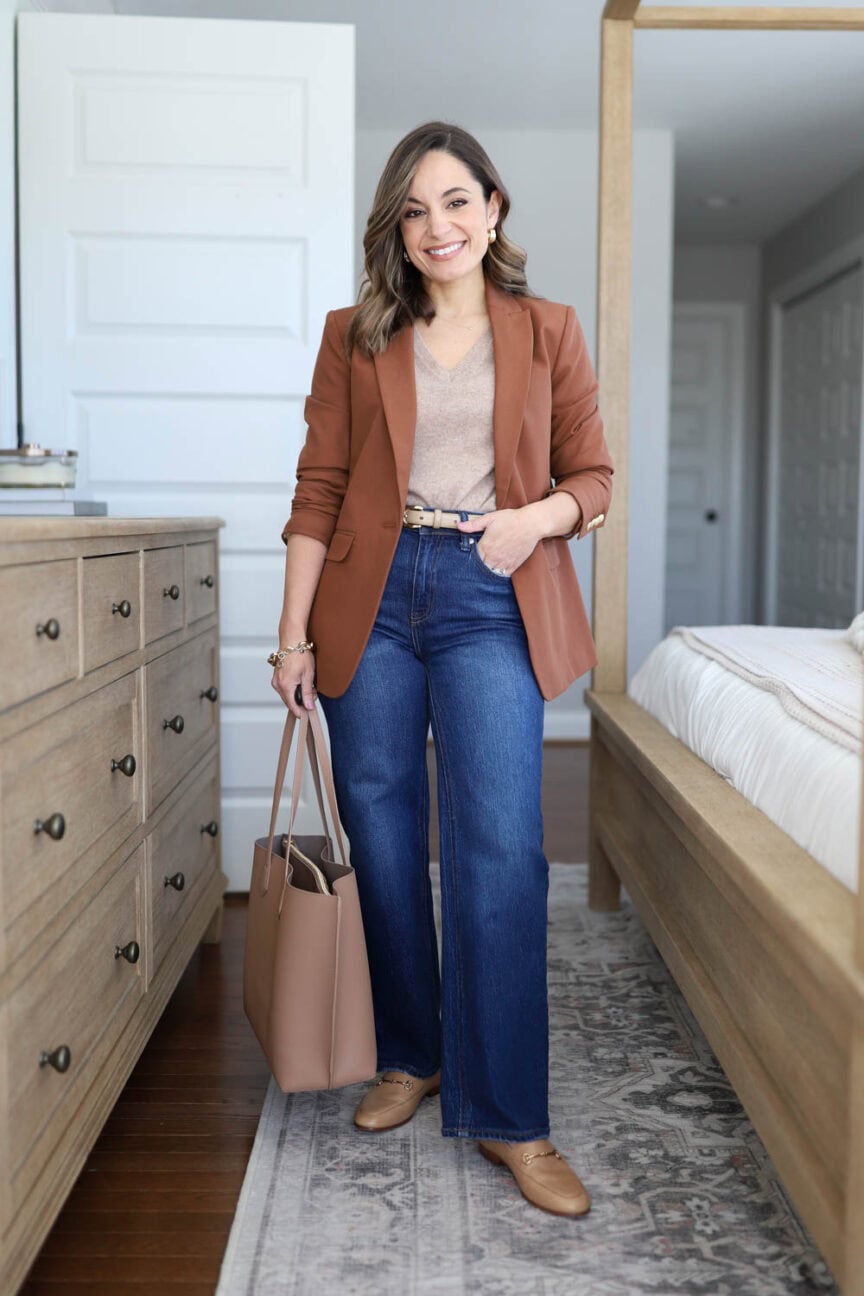
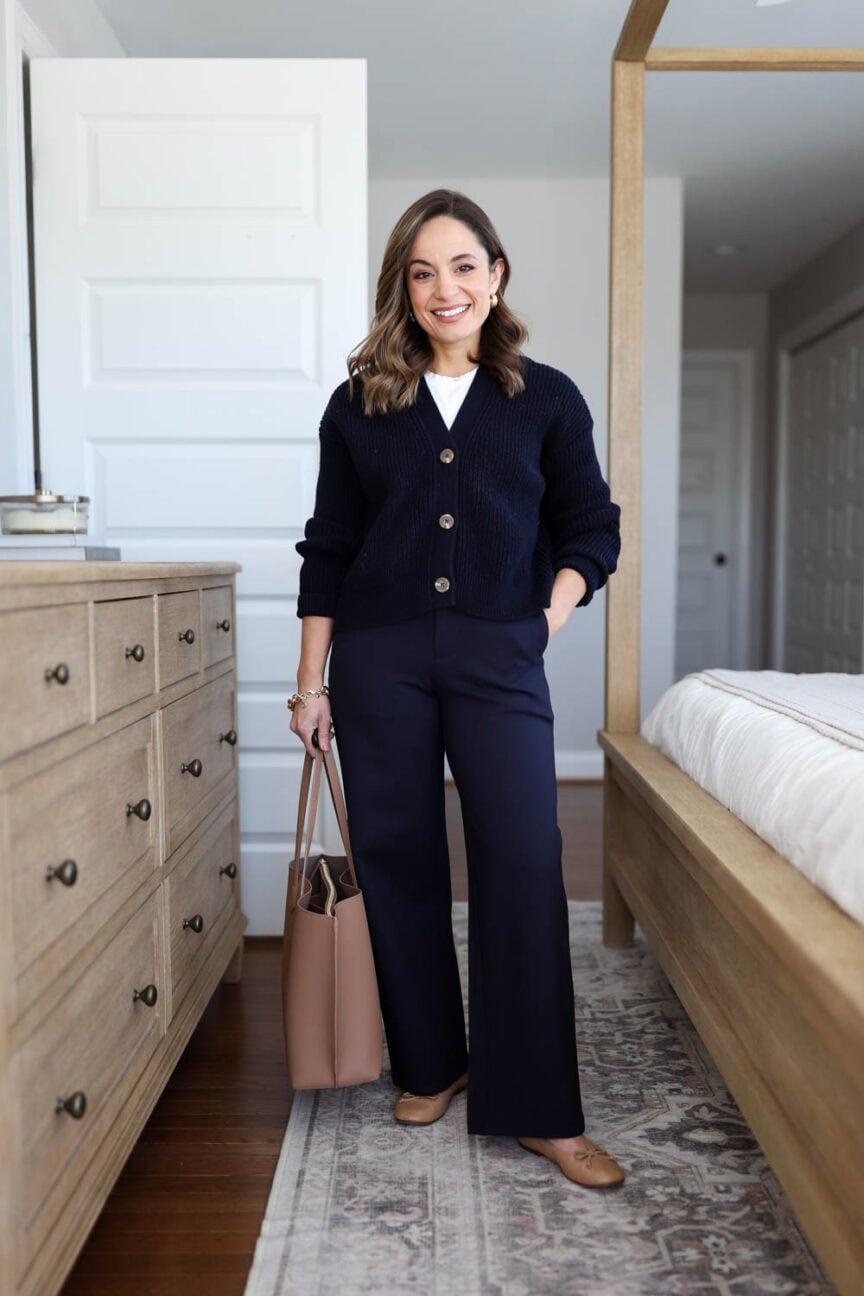
Take a look at the outfits above — notice one thing in common? I almost always wear light, neutral shoes. Boots are the exception, but otherwise I tend to reach for something close to my skin tone.
Why? Because low contrast adds length. When your shoes blend with your legs (or the hem of your pants), there’s no harsh visual break at the ankle, which helps keep the line long and uninterrupted.
I also try to avoid what I think of as “heavy” shoe styles — thick straps, bulky buckles, chunky soles. Lighter, more minimal styles tend to feel more balanced on a petite frame.
Pointed-toe shoes are often recommended for creating length, and they do work. But I don’t always choose them. They can read a bit dressy to me, so for casual outfits I’ll still stick with a light neutral — just in a round or almond toe instead.
Rules are Meant to be Broken
At the end of the day, you’re always going to look the best in what you feel the best in. Take those fashion rules with a grain of salt and make them your own.